
Work with us
How we train the people who run our centres
Two years · four semesters · in person and online
Home > Work With Us > LEARNIS Master
What it is for
Running a training company is not the same skill as teaching well, and the gap between the two is where most small education businesses fail. The Master works on the second one: reading the organisation as a whole, making decisions, organising resources, and leading people and processes rather than tasks.
Three things distinguish it. It prepares people for directing rather than executing. Its content follows what a training company actually has to do — building teams, finding and qualifying contacts, managing the client relationship, organising commercial processes and events, developing a position in the market. And it treats digital tools and channels as part of management, not as a separate subject.
Two years, four semesters
The path is built so that each semester rests on the one before it, from operating skills to running the business.
The first works on the commercial and delivery basics: generating and qualifying leads, public speaking, delivering individual courses, the logistics of running an event. The second moves to relationships — negotiation, group delivery, client management. The third consolidates and adds networking and more advanced commercial development. The fourth turns to the business itself: leading sales teams, managing the client portfolio, the administrative side, and the shift from running activities to being answerable for people, processes and results.
Personal branding and mindset run through all four rather than sitting in one.
How it is taught
Sessions alternate between in-person and live online, with practical exercises, business cases, and simulations drawn from real situations. Digital learning resources support the sessions rather than replacing them.
Each participant has a personal tutor from the start, along with group coaching and individual feedback. Exams are held at the end of each semester, in person and online. The nominal length is 24 months, extendable to 36 if up to a semester per year is repeated.
Who it is for, and where it leads
Students, professionals and entrepreneurs who want to create and run a training company. What helps is an open, analytical attitude, the ability to organise and to summarise, communication and teamwork, and self-discipline.
The competences it develops — strategy, human resources, client acquisition and management — apply whether someone builds their own business or takes a role in an existing one: head of client acquisition, commercial director, head of human resources, head of production. It is the same path we use to train our own Instructors and Heads of Centre.
Who directs it
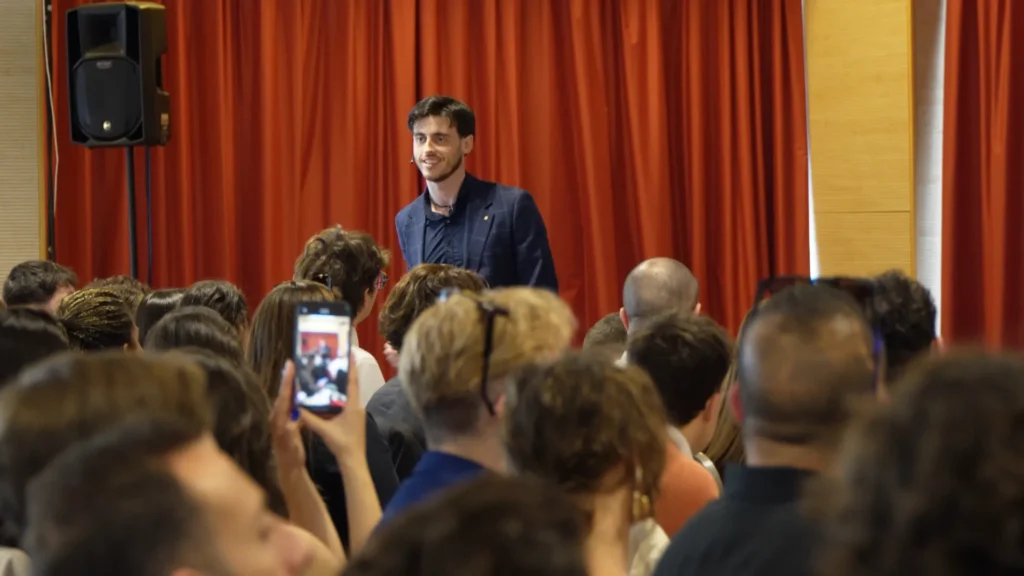
The Master is directed by Massimo De Donno and Giacomo Navone. The teaching staff are professionals and directors working in the training sector.
What the programme works on
- Strategic vision and running the business as a whole.
- Organisational development and coordinating teams.
- Leadership and managing change.
- Internal and external communication.
- Acquiring, qualifying and managing leads.
- Commercial and negotiation skills.
- Managing the client relationship.
- Networking and developing opportunities.
- Personal branding.
- Administrative and organisational skills.
- Delivering and managing training itself.
- Working with an international perspective.
| Semester | Focus | What is worked on |
|---|---|---|
| First | Commercial and delivery basics | Lead generation and qualification, public speaking, individual courses, event logistics |
| Second | Relationship and negotiation | Negotiation, group delivery, client management, leads from events and existing clients |
| Third | Commercial development | Client management in depth, networking, advanced commercial skills, group delivery |
| Fourth | Directing the business | Sales teams, client portfolio, administration, networking, overall responsibility |
Why this page is here and not among the courses
The Master is how the network trains the people who will run a centre and accompany participants through a path. Knowing that this training exists, how long it lasts and who directs it is part of being able to judge the group — which is why it is published rather than kept internal. It is also open to people from outside who want to build something of their own.