
Scientific Commitment
How the method works
Home > Scientific Commitment > Methodology
The first picture
The AMOS battery —<i>Abilità e Motivazione allo Studio</i>, developed by Cornoldi, De Beni, Meneghetti and colleagues and published by Erickson — makes it possible to observe the strategies a person uses, the coherence of their method, their organisation, their beliefs about intelligence, their sense of effectiveness, anxiety and resilience. It gives a starting picture.
The rest comes from the interview and from watching someone actually study during the first tutoring session: the biography, the relationship with each subject, the environment, how long attention lasts, what happens when they get stuck. A tutor watching a real study session can see exactly where the process jams.
This step is already transformative. A difficulty lived for years as a personal defect gets broken down into observable phenomena. «I'm not capable» becomes a set of questions about attention, comprehension, organisation, recall and emotional management. The person is handed a map.
The ground floor: cognitive fundamentals
Before techniques, and before any sequence of study, come the Fundamentals of Learning. These train cognitive operations that schooling tends to assume are already in place: defining precisely, telling apart concepts that sit close together, analysing the elements a concept is made of, building categories and superordinate terms, restating something in your own words, and making a logical step explicit and justifying it.
They are elementary and they are decisive. A memory problem is often a fragile understanding; a confused mind map often comes from concepts that were never properly distinguished; a shaky explanation often comes from words that were recognised but not owned.
They are called pre-functional because they prepare the cognitive conditions for studying at all. They are trained deliberately, the way an athlete breaks a movement down before performing it fluently. Once they are stable they free up capacity for the complex operations: advanced strategies occupy the upper floors, the fundamentals consolidate the ground and the foundations.
This material comes from the work carried out by CNR-IRPI researchers together with the SaperCapire team. The scope of that relationship, and what the licence covers, is set out on its own page.
The sequence: ALCUORE
On those foundations sits ALCUORE, an Italian acronym naming the seven phases a person goes through when facing real material. It turns «study» into something with parts you can name and work on.
The learner prepares attention and mental state; interrogates a text rather than passing through it; checks whether a coherent meaning has actually been built; connects concepts into a whole; makes hierarchies and relations visible; recalls actively over time; and expresses the material in their own words, and uses it.
Fundamentals and ALCUORE work at different levels and complete each other. The first train the elementary cognitive gestures the process rests on; the second organises what happens with a real body of content. When the explanation reveals a gap, the learner knows which phase to return to — including, when necessary, the fundamentals.
Metacognition runs through all of it
The learner watches what they are doing while they do it, judges the effect, and decides whether to continue or correct.
The practical consequence is a change in what an error means. Someone who cannot explain a topic does not conclude that they have a poor memory: they can go back to comprehension, to the distinction between two concepts, to how the material was organised, or to how they planned their recall. The error stops being a verdict on the person and becomes information about the process.
The role of tutoring
At the start the tutor lends the learner a direction they do not yet possess. They ask the questions the learner cannot yet ask themselves, connect the profiling data to what they observe, help set realistic objectives, and step in at the moments when a cognitive difficulty reactivates old experiences of failure.
The confidence a tutor offers is not generic encouragement. It comes from reading a profile, from evidence, and from a procedure adapted to that person.
Over time the direction has to transfer. The learner internalises the questions, recognises where they are, chooses the tool and checks the result. The tutor succeeds by becoming progressively less necessary.
Where artificial intelligence fits
AI enters this architecture with a defined job: personalising the path. It helps build glossaries for the terms that block comprehension, activate prior knowledge before tackling something new, generate mock tests and exams, and give immediate feedback on what has been understood and what needs revisiting.
The wider question — how to use AI metacognitively, and what role to assign it — is the subject of a course of its own, and is not treated here.
The conditions the method needs
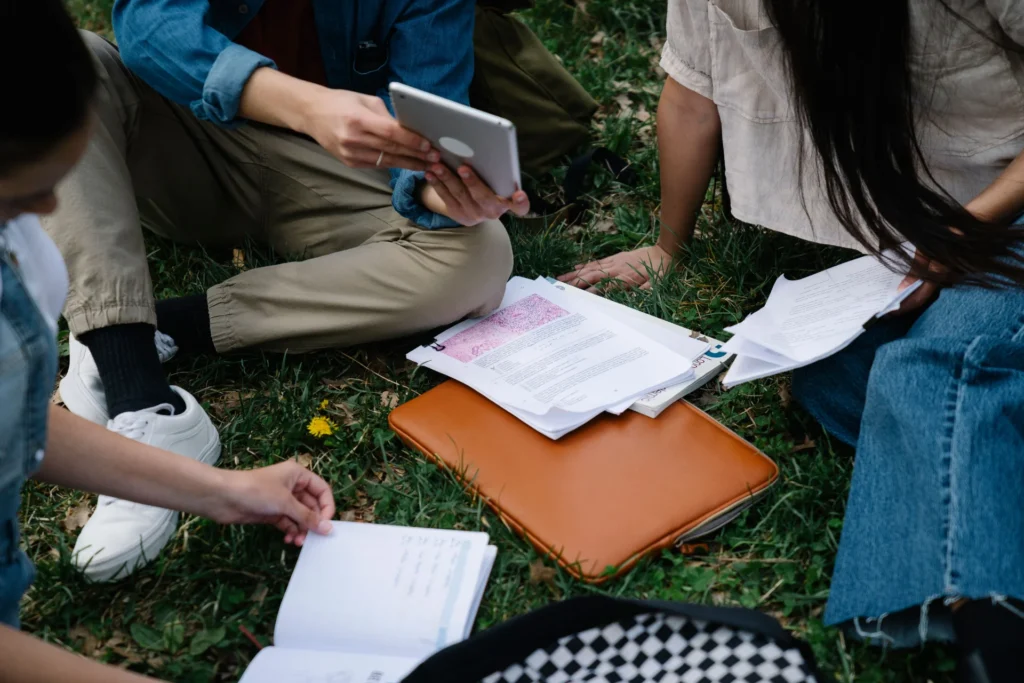
- Full immersion — concentrated time, in a setting designed to remove interruptions
- Spaced repetition — material returning at widening intervals, so each retrieval strengthens the trace
- Mentors and peer groups — someone who knows the path, and a group walking it at the same time
- Physical, digital and social environments — designed together with the method, not around it
| Phase | What the learner does |
|---|---|
| A · Attenzione e Atteggiamento | Prepares attention and mental state before starting |
| L · Lettura | Interrogates the text instead of passing through it |
| C · Comprensione | Checks whether a coherent meaning has actually been built |
| U · Unificazione | Connects the concepts into a single picture |
| O · Organizzazione | Makes hierarchies and relations visible |
| R · Ricordo | Recalls actively, at spaced intervals |
| E · Espressione | Explains the material in their own words, and uses it |
Handing over a technique is not the same as building the capacity to use it
A brilliant technique, on its own, can easily become one more thing applied badly. This is why the work starts below the techniques, with the cognitive gestures that make them usable — and why it ends above them, with a learner who can choose which one to reach for, and knows why.