
The idea behind Learnis
Transformative Education
Home > Scientific Commitment > Transformative Education
Learning and education are not the same thing
Jack Mezirow gave this process a name: transformative learning. The two expressions are close, but not interchangeable. Transformative learning is what happens inside a person — a change in the way they give meaning to experience. Transformative Education is what an educational system deliberately puts in place so that the process can happen: experiences, relationships, tools, environments, time to practise, comparison and support. Mezirow formulated a theory of the first. Learnis defines itself through the second, because what it designs is an ecosystem intended to make transformation possible. Transformation always belongs to the person, and no organisation can claim it. Education can only create conditions that are more or less favourable to it.
The frames we read reality through
We do not meet reality neutrally. We read it through structures of expectation formed by education, culture, language, relationships, successes and failures. These frames quietly tell us what is possible, what is dangerous and how far we can go. In studying they take very concrete forms: “I have no memory”, “I don't understand maths”, “I have to read things ten times”, “if I get distracted it's because I lack willpower”. Mezirow distinguished habits of mind — broad, deep-seated orientations, often unconscious — from points of view, the beliefs and reactions through which those orientations show up in a specific situation.
Where transformation begins
Something happens that the old explanation cannot account for: an unexpected result, a familiar strategy that keeps failing, someone tackling the same task in a different way, a question we cannot answer. This is often called a disorienting dilemma. The term suggests a dramatic crisis; in training it usually takes everyday forms.
The new fact does not cancel years of difficulty, but it cracks an explanation that seemed final. What turns the crack into change is critical reflection — bringing to light the premises we used to interpret what happened — and dialogue, because a new interpretation becomes solid only when it can be discussed, tested against facts and challenged from other points of view.
How Learnis puts it into practice
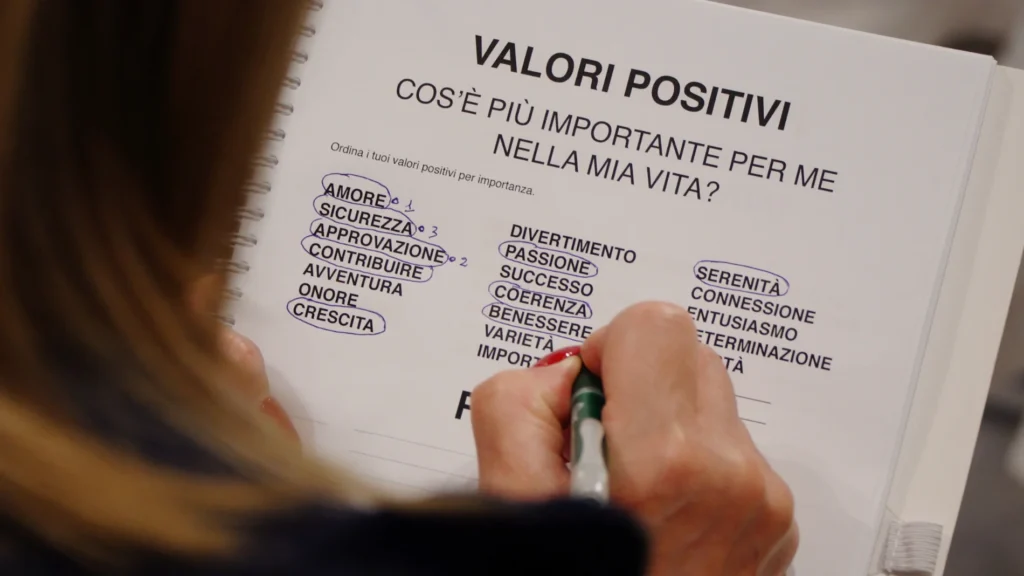
Transformative Education shows up mainly in the architecture. Immersive experiences interrupt routine and make visible abilities or automatic habits the person was not observing. Continuous paths give practice the time to consolidate. Peer groups offer comparison, belonging and alternative perspectives. Mentors — instructors and tutors trained in metacognition — accompany the passage from insight to competence. Physical, digital and social environments keep tools, relationships and opportunities to practise within reach. Editorial content prepares, deepens and extends the experience. Learning comes first because it is the meta-ability that makes every other capability possible: this is why the path starts with Learning Skills, extends to Personal Skills and reaches Professional Skills.
What a transformative path is made of
- Immersive experiences that interrupt routine and make the invisible visible
- Continuous paths that give practice the time to settle
- Peer groups that make the effort shared rather than personal
- Mentors trained to read the process, not only to explain a procedure
- Physical, digital and social environments designed together with the method
- Editorial content that prepares the experience and extends it afterwards
How a transformative path is measured
The criterion is autonomy. A path works when it helps a person see what was previously acting unseen, gives them the tools to build an alternative, stays with them while that alternative is tested, and gradually hands them the direction of the process. If the work succeeds, they need their teacher less and less.