
Professional Skills
The human competencies work truly asks for, trained deliberately.
Home > Formative Offer > Professional Skills
A career starts on what you know. It continues on what you can do with other people. Communicating so that something lands. Listening well enough to change your mind. Organising work that several people share. Answering for a result rather than for a task. Handling the disagreement that comes with all of it. These are the soft skills, and they decide a great deal of what an organisation manages to do — yet they are the part almost nobody is formally trained on, because they are assumed to arrive on their own. They can be learned, and they are learned the way any other ability is: by practising them in a situation close enough to the real one, and by looking afterwards at what actually happened. Teamwork is where all of them meet. A group does not become a team because it shares an objective. It becomes one when each person can rely on how the others will behave when something goes wrong. That reliability is built, and it is the ground both paths on this page work on. For a company, the way in is a conversation rather than a catalogue. A programme can be a single course for one team, a longer route across the year, or an academy run inside the organisation itself — training its own people, on its own work, with the group's method and standards behind it. What shape it takes depends on the size of the organisation, on who it involves, and on what has already been tried.
The model comes from running the group itself
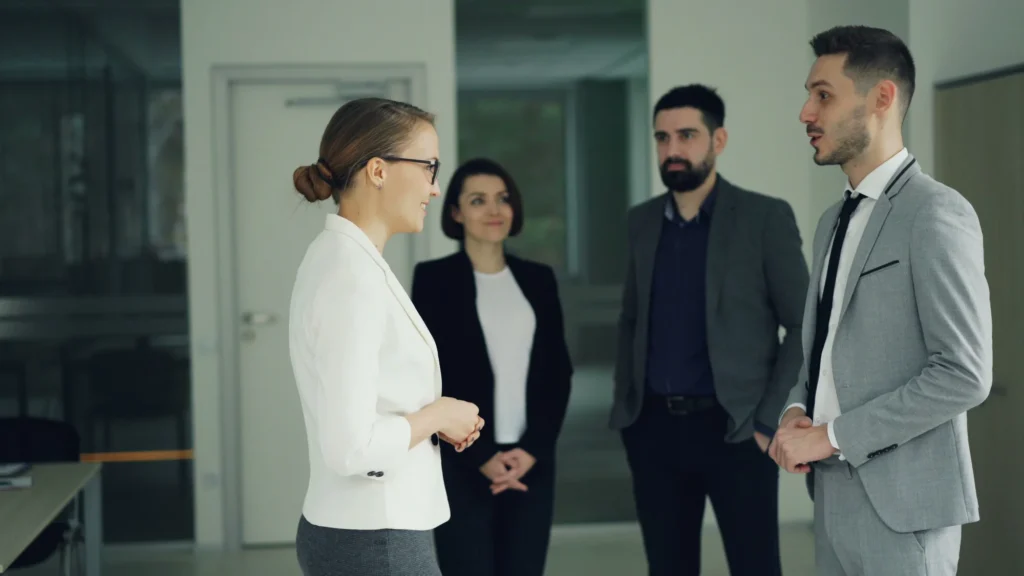
Talking about a company?
Tell us how the organisation works and where it is losing energy. The first conversation is about that, and it is what decides whether the right answer is one course, a programme across the year, or an academy of your own.